Spring is when many homeowners first notice appliance problems that were building quietly all winter. Warmer temperatures, seasonal startup, spring cleaning, and heavier household use all put extra pressure on key systems. That is why spring is a common time for appliance service calls, especially for cooling, kitchen, and laundry equipment. Guidance from the U.S. Department of Energy and ENERGY STAR highlights spring trouble spots such as dirty AC filters, dirty coils, and clogged condensate drains, while Appliance EMT’s repair, Installation, and maintenance content emphasizes recurring household issues like dirty refrigerator coils, worn washer hoses, clogged dishwasher filters, and blocked dryer vents.
If you are wondering which home appliances need the most repairs in the spring, the main trouble spots are usually air conditioners, refrigerators, washing machines, dishwashers, and dryers. The good news is that many of the most common spring appliance repairs are also preventable with simple maintenance.
This guide explains which home appliances need the most repairs in the spring, why they break down, and how to avoid those problems before they turn into expensive service calls. The ranking and prevention advice below are based on seasonal maintenance guidance from government energy resources and on common repair patterns described by Appliance EMT across its maintenance and service pages.
Table of Contents
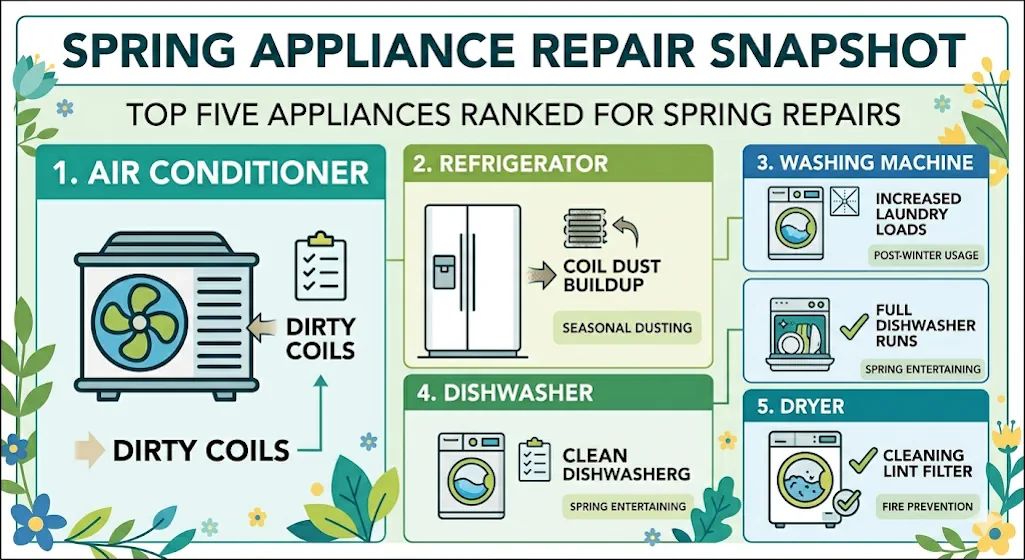
Spring Appliance Repair Snapshot
The home appliances that tend to need the most repairs in the spring are:
- Air conditioners
- Refrigerators
- Washing machines
- Dishwashers
- Dryers
Why Appliance Repairs Increase in Spring
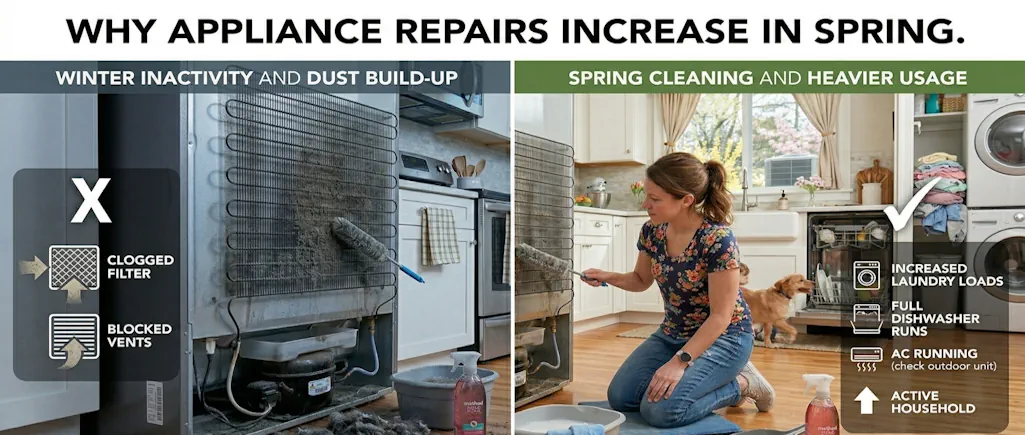
Air conditioners usually top the list because spring startup reveals hidden issues fast. Refrigerators, washers, dishwashers, and dryers also see more spring repair problems because warmer weather, spring cleaning, and overdue maintenance put extra stress on key parts. Appliance EMT’s maintenance and repair pages line up with that pattern by repeatedly highlighting coil cleaning, hose inspection, filter cleaning, spray-arm checks, and vent maintenance as high-value preventive tasks.
Spring is a transition season, and transitions are hard on appliances. In winter, some systems sit unused while others work overtime. In spring, households begin cleaning more, doing more laundry, running kitchen appliances more often, and depending on cooling equipment again. That combination reveals issues such as dirty filters, clogged drains, worn seals and hoses, blocked vents, poor airflow, and moisture buildup.
Many spring appliance repairs are not caused by one sudden failure. They are usually the result of small maintenance problems that become impossible to ignore once usage changes.
1) Air Conditioners Need the Most Repairs in Spring
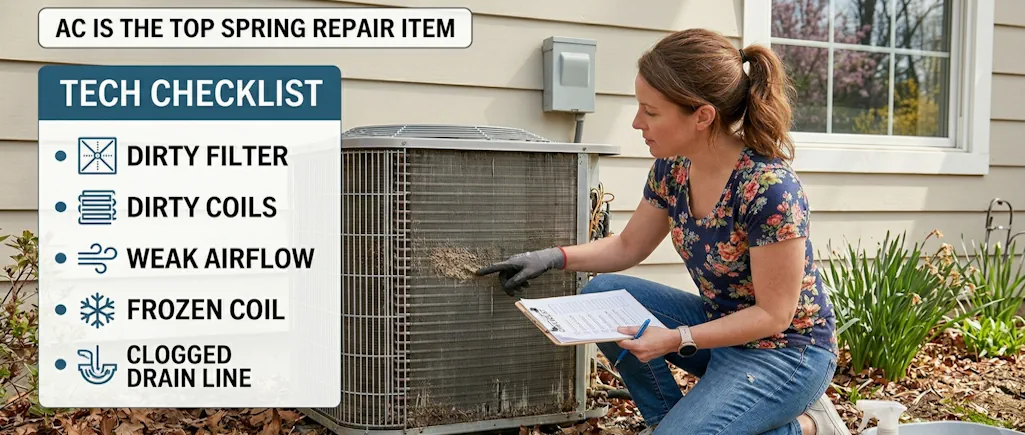
If HVAC equipment is included in your appliance category, air conditioners are the most common spring repair issue. After sitting idle for months, AC systems are suddenly expected to cool the home as temperatures rise. That seasonal startup often exposes hidden problems right away. The DOE (Department of Energy) says dirty A/C filters reduce airflow and efficiency, while dirty filters and coils can cause malfunction and even premature compressor or fan failure. ENERGY STAR also advises checking the condensate drain because a plugged drain can cause water damage and humidity problems.
Most Common AC Repairs in Spring
- Dirty or clogged air filters
- Dirty condenser or evaporator coils
- Refrigerant leaks
- Frozen coils
- Weak airflow
- Clogged condensate drains
- Faulty capacitors or electrical components
These are the exact kinds of issues that tend to show up when a cooling system goes from winter inactivity to spring demand.
Why Air Conditioners Break Down in Spring
Air conditioners often fail in spring because the system is moving from no use to active use. Dust, leaves, and debris may have collected around the outdoor unit, filters may not have been changed, and small electrical or airflow problems from the previous season can become much more obvious.
How to Avoid AC Repairs in Spring
- Replace or clean the air filter before the season starts
- Clear debris around the outdoor unit
- Trim plants and shrubs to improve airflow
- Check for weak airflow at vents
- Schedule seasonal maintenance before the first major heat wave
- Make sure the drain line is clear
According to the DOE, Routine upkeep of your air conditioner’s filters, coils, fins, and refrigerant lines is key to keeping it running efficiently and effectively. In addition, “neglecting maintenance leads to a decline in performance and increased energy use.”
2) Refrigerators Are One of the Most Common Spring Appliance Repairs
Refrigerators work year-round, but spring tends to expose cooling issues. As temperatures rise, refrigerators must work harder to maintain safe food temperatures. If the appliance already has weak airflow, dirty coils, or worn seals, performance can drop quickly. Appliance repair companies specifically calls out inadequate cooling, ice maker malfunctions, water leaks, and temperature-related problems across its refrigerator repair pages, while its maintenance content recommends cleaning condenser coils and checking door seals.
Most Common Refrigerator Repairs in Spring
- Refrigerator not cooling properly
- Dirty condenser coils causing strain
- Temperature fluctuations
- Frost buildup
- Leaking water line
- Ice maker problems
- Worn or loose door gaskets
Why Refrigerators Need Repairs in Spring
Spring weather increases the workload on refrigerators. A unit that was barely keeping up in winter may start struggling as the kitchen gets warmer. Dust and pet hair around condenser coils can make the problem worse, and weak seals can let cooling escape.
How to Avoid Refrigerator Repairs in Spring
- Vacuum the condenser coils
- Check the door gasket for cracks or weak sealing
- Make sure the refrigerator has proper clearance for ventilation
- Do not overfill the fridge and block airflow
- Inspect water lines for leaks or wear
- Set the correct temperature and monitor cooling performance
3) Washing Machines Often Need Repairs During Spring Cleaning Season
Washing machines become a bigger repair risk in spring because households usually increase laundry loads. Bedding, rugs, comforters, curtains, and other bulky items put extra stress on the machine. Appliance EMT highlights common washer problems such as not draining properly, loud spin-cycle noises, balance problems, and ventilation or dryer-heating issues in stacked units, while its maintenance content recommends inspecting hoses and keeping the machine clean.
Most Common Washer Repairs in Spring
- Drain pump problems
- Leaking hoses
- Poor drainage
- Unbalanced spin cycles
- Excess vibration
- Door seal wear
- Mold and mildew odor
Why Washers Break More Often in Spring
Spring cleaning creates heavier and more frequent laundry cycles. That extra use often reveals existing problems, especially in machines with old hoses, drainage issues, or worn suspension components. Front-load washers can be especially vulnerable to odor and gasket issues if moisture has been trapped for months.
How to Avoid Washing Machine Repairs in Spring
- Inspect hoses for cracks, bulges, or leaks
- Avoid overloading the washer
- Wash bulky items in balanced loads
- Clean the detergent drawer and door seal
- Leave the door open after cycles to reduce moisture buildup
- Check that the machine is level to reduce vibration
- Clean the drain filter if your model has one
4) Dishwashers Are a Common Spring Repair Problem
Dishwashers also see more problems in spring because homeowners clean more, cook more, and start noticing poor performance that built up over time. According to Appliance EMT the most common issues such as fill problems, door-latch issues, and water-inlet trouble, while its maintenance articles emphasize filter cleaning and spray-arm inspection.
Most Common Dishwasher Repairs in Spring
- Standing water in the bottom
- Drain clogs
- Leaking door seals
- Spray arm blockage
- Dishwasher not cleaning dishes well
- Filter clogs
- Bad smells from trapped food debris
Why Dishwashers Break Down in Spring
By spring, months of grease, detergent residue, and food particles may have reduced dishwasher performance. A small clog or worn seal can become much more noticeable once usage picks up.
How to Avoid Dishwasher Repairs in Spring
- Remove and clean the dishwasher filter regularly
- Check and clean the spray arms
- Inspect the door seal for wear or cracking
- Run a cleaning cycle to remove buildup
- Scrape large food debris off dishes before loading
- Make sure the drain path is not blocked
In case your dishwasher does breakdown this Spring, try these tips on what to do when your dishwasher breaks down before calling an appliance technician.
5) Dryers Still Make the Spring Repair List
Dryers are less spring-specific than air conditioners, but they still need attention after a winter of heavy loads. Blankets, hoodies, and cold-weather laundry often leave dryer vents partially clogged by the time spring arrives. Appliance EMT’s maintenance content specifically calls out lint-trap and vent cleaning as a major preventive step, and its dryer-efficiency article notes that blocked ventilation hurts performance.
Most Common Dryer Repairs in Spring
- Dryer not heating
- Long dry times
- Weak airflow
- Blocked venting
- Thermal fuse issues
- Drum belt wear
- Moisture sensor problems
Why Dryers Need Repairs in Spring
Dryers often enter spring already stressed from heavy winter use. If lint buildup has restricted airflow, the machine may start overheating, taking longer to dry clothes, or shutting down completely.
How to Avoid Dryer Repairs in Spring
- Clean the lint trap after every load
- Inspect and clean the dryer vent line
- Make sure the outside exhaust flap opens properly
- Avoid overloading the dryer
- Watch for longer dry times, which often signal airflow problems
- Clean behind the dryer if lint has built up
What Causes the Most Common Appliance Repairs in Spring?
Across these appliance categories, the same patterns show up again and again:
Deferred Maintenance
Small tasks get skipped during winter, then become bigger problems in spring.
Seasonal Startup
Air conditioners are the clearest example, but any appliance moving into heavier use can develop issues fast.
Extra Workload
Spring cleaning increases laundry, dishwashing, refrigeration demand, and general household use. This is partly an inference from how Appliance EMT frames recurring maintenance and repair triggers across household appliances.
Dirt, Dust, and Debris
Clogged filters, coils, vents, and drains are among the biggest causes of preventable repairs.
Aging Parts
Old hoses, seals, pumps, belts, and motors are more likely to fail once spring demand increases. This is a practical repair inference supported by the common problem lists on Appliance EMT’s service pages.
While appliance technology is evolving, that helps to maintain your appliance in tip top shape, regular maintenance is still a big part of helping your appliances have a long life.
How to Avoid Spring Appliance Repairs
If your goal is to reduce the most common appliance repairs in spring, focus on prevention before the season is fully underway.
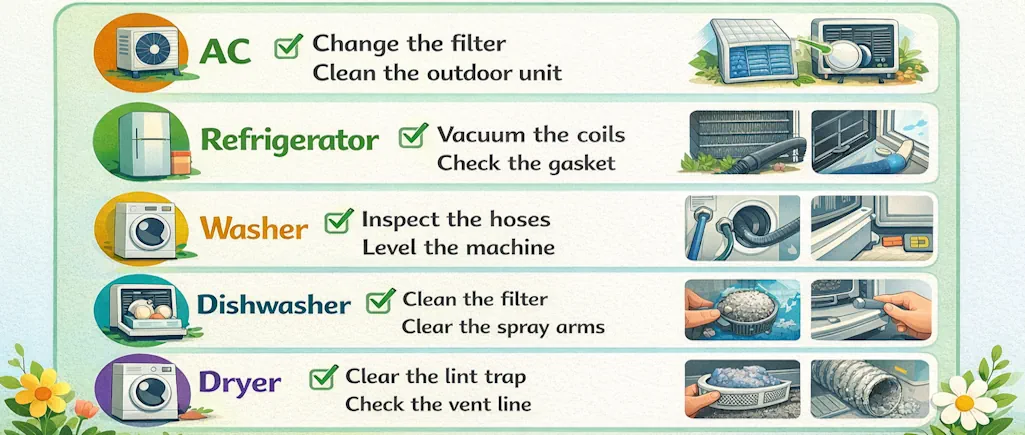
Spring Appliance Maintenance Checklist
Air Conditioner
- Change the filter
- Clear debris around the unit
- Inspect vents and airflow
- Schedule preventive service
Refrigerator
- Clean condenser coils
- Check the door seals
- Confirm the temperature is stable
- Inspect water lines
Washing Machine
- Check hoses
- Clean the gasket and detergent tray
- Avoid overloaded cycles
- Level the machine
Dishwasher
- Clean the filter
- Inspect spray arms
- Check the door seal
- Run a dishwasher cleaner cycle
Dryer
- Clean the lint trap
- Clean the vent line
- Check airflow outside
- Watch for overheating or long dry times
Best Prevention Strategy
The best way to avoid spring appliance repairs is to inspect appliances before heavy seasonal use begins. Most homeowners wait until something stops working. A better approach is to handle small maintenance tasks in early spring before performance drops. That approach is consistent with both DOE / ENERGY STAR cooling guidance and Appliance EMT’s maintenance-first framing across refrigerator, washer, dishwasher, and dryer care.
In case your appliance does breakdown and you need fast appliance repair, look for companies like Appliance EMT which offers Emergency Appliance Repair Service.
FAQ
Which appliance needs the most repairs in the spring?
Air conditioners usually need the most repairs in the spring because they are being restarted after winter and face immediate demand as temperatures rise.
What are the most common appliance repairs in spring?
The most common spring appliance repairs involve air conditioners, refrigerators, washing machines, dishwashers, and dryers. That ranking is based on seasonal maintenance risk plus the recurring repair themes highlighted in Appliance EMT’s service and maintenance content.
Why do appliances break more often in spring?
Appliances often seem to break more often in spring because of seasonal startup, heavier cleaning activity, warmer temperatures, dirt buildup, and delayed maintenance.
How can I avoid appliance repairs in spring?
You can avoid many spring appliance repairs by cleaning filters, coils, hoses, vents, and drains, checking seals and airflow, and addressing small issues before seasonal use increases.
Are washer and dishwasher repairs common in spring?
Yes. Spring cleaning often increases both laundry and dishwashing, which makes drainage issues, leaks, clogs, and worn seals more noticeable. Appliance EMT’s washer and dishwasher content reflects those recurring problems.
Final Takeaway
If you want to know which home appliances need the most repairs in the spring and how to avoid them, start with air conditioners, refrigerators, washing machines, dishwashers, and dryers. These appliances face the biggest mix of seasonal startup stress, heavier use, dirt buildup, and delayed maintenance.
The good news is that many of the most common appliance repairs in spring are preventable. A simple spring maintenance routine can reduce breakdowns, improve efficiency, and help expensive appliances last longer.
Editorial note: This article draws on seasonal maintenance guidance from recognized energy resources and on common household repair patterns highlighted by Appliance EMT’s repair, maintenance and service content.