I have worked with enough homeowners in Atlanta to see a clear pattern. Appliances here do not fail randomly. They wear down faster because of the environment they operate in every day.
Atlanta’s heat and humidity affect more than comfort. They impact how long your refrigerator lasts, how efficiently your dryer runs, and how often your dishwasher needs repair.
If you live in Atlanta or a similar climate, understanding how appliance technology is evolving can save you money and frustration. In this guide, I will walk through what is changing, why it matters, and how to make better buying decisions based on real conditions, not ideal lab testing.
Key Takeaways
- Heat and humidity significantly increase appliance wear and failure rates
- New appliances are being designed with better moisture and heat resistance
- Adaptive cooling and smart diagnostics improve long-term performance
- Induction stoves and heat pump dryers perform better in humid environments
- Appliance selection should match your home’s ventilation and insulation
- Maintenance still plays a major role, regardless of technology
Why Atlanta’s Climate Is Hard on Appliances
Atlanta has a humid subtropical climate, and that creates consistent stress on household appliances.
From late spring through early fall, humidity often ranges from 70% to 80%. When temperatures exceed 90°F, appliances are forced to work harder than they were designed to under standard testing conditions.
Most appliances are tested at around 70°F with moderate humidity. That is far from what I see inside Atlanta homes during summer.
What This Means in Practice
Here is how these conditions affect common appliances:
- Refrigerators: Compressors run longer cycles to maintain internal temperatures
- Ovens and ranges: Control boards are more exposed to moisture buildup
- Washing machines: Mold and mildew form faster in humid laundry areas
- Dishwashers: Door seals degrade faster due to heat and moisture cycling
- Dryers: Efficiency drops when incoming air is already humid
This is not theoretical. In fact, research into why Home Appliances Fail More Often in Atlanta Homes points directly to climate stress as a leading factor — something that often catches homeowners off guard when a unit fails well before its expected lifespan.
How Appliance Technology Is Responding in 2026
Manufacturers are starting to design appliances for real-world environments like Atlanta. I have seen clear improvements in the latest models.
1. Thermal-Resistant Electronics
Modern appliances now include better protection for internal components.
Many newer models use conformal coatings on control boards. This thin layer protects circuits from moisture and corrosion.
In practical terms, this means fewer failures caused by humidity exposure. This is especially important for ovens, refrigerators, and dishwashers.
2. Adaptive Cooling Refrigerators
Refrigerators have become more responsive to their surroundings.
Instead of running at fixed speeds, newer compressors adjust based on room temperature. If your kitchen heats up during the day, the system compensates automatically.
I have seen this make a noticeable difference in homes with fluctuating kitchen temperatures, especially in older properties.
3. Induction Cooking for Heat Reduction
In hot climates, reducing indoor heat matters more than most people realize.
Traditional gas and electric stoves release excess heat into the room. That heat forces your air conditioning system to work harder.
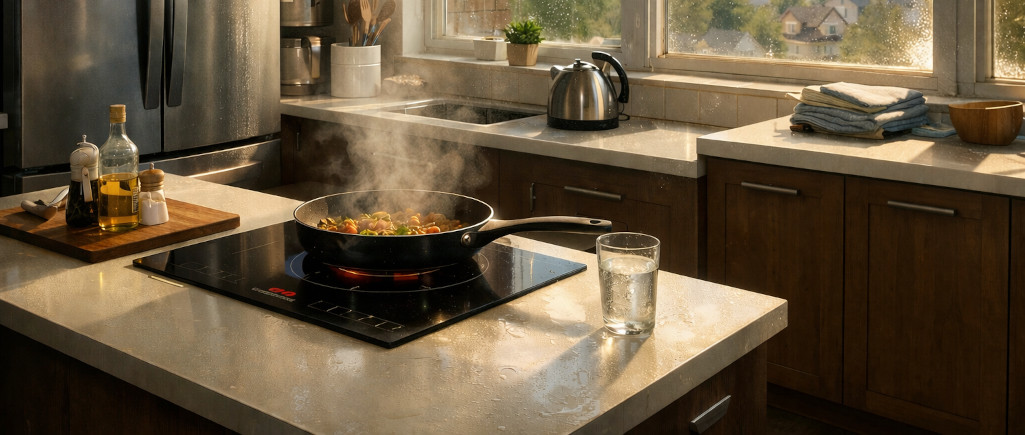
Induction cooktops heat the cookware directly. Very little heat escapes into the air.
In my experience, homeowners who switch to induction notice:
- Cooler kitchens during summer
- Lower strain on air conditioning
- More consistent cooking performance
4. Heat Pump Dryers for Humid Air
Dryers struggle in humid environments because they rely on the surrounding air.
Heat pump dryers solve this problem by using a closed-loop system. They recycle and dehumidify air internally instead of pulling in moisture-heavy air.
I often recommend these for homes with poor ventilation or enclosed laundry areas. They run more efficiently and place less stress on internal components.
5. Moisture-Sensing Dishwashers
Dishwashers have traditionally been vulnerable in humid climates.
Newer models now use humidity sensors to adjust drying cycles. Instead of running on fixed timers, they respond to actual moisture levels inside the unit.
This improves drying performance and reduces wear on heating elements and seals.

What Atlanta Homes Really Demand
Atlanta’s housing mix plays a big role in how appliances perform, and I see this firsthand when comparing different neighborhoods.
In areas like Grant Park and Inman Park, many homes are older and less insulated. Indoor temperatures tend to fluctuate throughout the day, especially during peak summer heat. That puts extra strain on refrigerator compressors and sensitive electronics inside ranges and dishwashers.
In newer parts of the city like Midtown or West Midtown, homes are built more tightly and are more energy-efficient. That helps with temperature control, but it can also trap humidity indoors if ventilation is not properly designed. I have seen laundry rooms in these homes stay damp for hours, which affects dryers and washing machines over time.
What stands out to me is how closely appliance performance is tied to real, everyday living conditions in Atlanta. It is not just about the machine itself, but the environment it operates in.
I have also noticed that some local companies are becoming more involved in addressing broader community needs, not just appliance repairs. For example, Appliance EMT’s recent partnership with a Metro Atlanta outreach initiative reflects how closely appliance services are connected to the realities many households face across the city.
What this tells me is simple. There is no one-size-fits-all solution. The right appliance depends on your home’s structure, airflow, and how it handles heat and humidity day to day.
What Most Homeowners Get Wrong About Appliances
Over the years, I have noticed a few consistent mistakes.
1. Ignoring Climate When Buying
Many people choose appliances based on price or brand. They do not consider how the unit performs in humid conditions.
That decision often leads to earlier breakdowns.
2. Overlooking Operating Temperature Limits
Some appliances are only rated to operate efficiently up to 85°F.
In Atlanta, kitchens, garages, and laundry rooms can easily exceed that.
3. Skipping Ventilation Improvements
No appliance can compensate for poor airflow.
I have seen high-end units fail early simply because the room trapped heat and moisture.
4. Underestimating Long-Term Costs
Advanced appliances can cost more to repair. If you are in a high-stress environment like Atlanta, those repairs are more likely to be needed over time.
Planning for maintenance and potential repairs is part of making a smart purchase.
Frequently Asked Questions
Does humidity in Atlanta shorten appliance lifespan?
Yes. High humidity accelerates seal wear, promotes mold growth, and increases the workload on components such as compressors.
Are induction stoves better for hot climates?
Yes. They produce less ambient heat, helping keep kitchens cooler and reducing strain on air conditioning systems.
Which appliance is most affected by humidity?
Refrigerators and washing machines are most often affected by compressor strain and moisture buildup.
Are newer appliances better in humid environments?
Yes, especially models with sealed electronics and adaptive systems. However, they still require proper maintenance and ventilation.
Should I consider extended warranties in Atlanta?
In many cases, yes. The added environmental stress increases the likelihood of repairs, especially for refrigerators and dishwashers.
The Bottom Line for Atlanta Homeowners
Appliance technology is improving in ways that directly benefit homeowners in hot and humid climates like Atlanta.
From moisture-resistant electronics to adaptive cooling and closed-loop drying systems, manufacturers are building appliances that better handle real-world conditions.
However, technology alone is not enough. Your home’s ventilation, insulation, and layout still play a major role in how well your appliances perform.
From my experience, the best results come from combining the right appliance with the right environment. If you take both into account, you will get better performance, fewer repairs, and a longer lifespan from your investment.