Most homeowners don’t think much about their home ice maker until it suddenly stops keeping up with demand. Whether it’s before a family gathering or during the hottest week of summer, an empty ice bin has a way of getting your attention.
Many people assume an ice maker that isn’t producing enough ice needs a repair or replacement. In reality, the most common causes are often far less serious. Maintenance issues, water supply problems, clogged filters, and temperature fluctuations account for a large percentage of ice maker complaints.
Understanding how an ice maker works and recognizing early warning signs can help you restore performance quickly while avoiding unnecessary repair costs.
Key Takeaways
- Regular cleaning and descaling help maintain consistent ice production.
- Water filters should be replaced according to manufacturer recommendations.
- Freezer temperature, water supply issues, and mineral buildup are common causes of reduced output.
- Hard water can shorten maintenance intervals and accelerate internal wear.
- Many ice maker problems can be diagnosed before calling a technician.
- Addressing performance issues early often prevents more expensive repairs.
Why Ice Makers Stop Producing Ice
An ice maker relies on several systems working together:
- A consistent water supply
- Proper freezer temperatures
- Clean internal components
- Functional sensors and controls
- Adequate airflow around refrigeration components
When any of these systems are compromised, ice production can decline.
In service calls involving underperforming ice makers, maintenance-related issues are frequently the first place to look. Mineral deposits, restricted water flow, dirty filters, and frozen supply lines often create symptoms that resemble mechanical failures.
Before assuming the appliance is broken, it is worth checking several common causes.
Why Is My Home Ice Maker Not Making Ice?
Check the Water Supply
An ice maker cannot produce ice without a steady supply of water.
Inspect the following:
- Kinked or damaged water lines
- Partially closed shutoff valves
- Leaking connections
- Frozen water supply tubing
Even a minor restriction can significantly reduce production and create small or hollow ice cubes.
Check the Freezer Temperature
Most ice makers perform best when freezer temperatures remain around 0°F (-18°C).
If temperatures rise above recommended levels, ice production slows considerably. Common causes include:
- Dirty condenser coils
- Frequently opened freezer doors
- Worn door seals
- Overloaded freezer compartments
A refrigerator thermometer can help verify actual operating temperatures.
Inspect the Water Filter
A clogged filter reduces water flow and often causes:
- Slow ice production
- Smaller cubes
- Cloudy ice
- Unusual taste or odor
Many manufacturers recommend replacing filters every six months, although homes with hard water may require more frequent changes.
Look for Frozen Fill Tubes
The small tube that delivers water into the ice maker can occasionally freeze.
Signs include:
- No new ice production
- Normal freezer temperatures
- Empty ice trays
A frozen fill tube may indicate a failing water inlet valve or a temperature-related issue that requires further diagnosis.
Check the Ice Maker Sensor or Shutoff Arm
Many refrigerator ice makers include a sensor or mechanical arm that stops production when the ice bin is full.
If the arm becomes stuck or the sensor is blocked, the unit may incorrectly believe the bin is full and stop making ice altogether.
Common Ice Maker Problems and Their Causes
| Symptom | Possible Cause | Recommended Action |
| Little or no ice production | Restricted water flow | Replace filter and inspect supply line |
| Small or hollow cubes | Low water pressure | Check water valve and filter |
| Ice tastes bad | Dirty filter or contamination | Replace filter and sanitize unit |
| Continuous operation with little output | Mineral buildup or temperature issues | Deep cleaning and inspection |
| Poor performance after installation | Incorrect plumbing connection | Verify cold-water supply |
| Ice maker stopped suddenly | Sensor, fill tube, or control issue | Troubleshoot components or call technician |
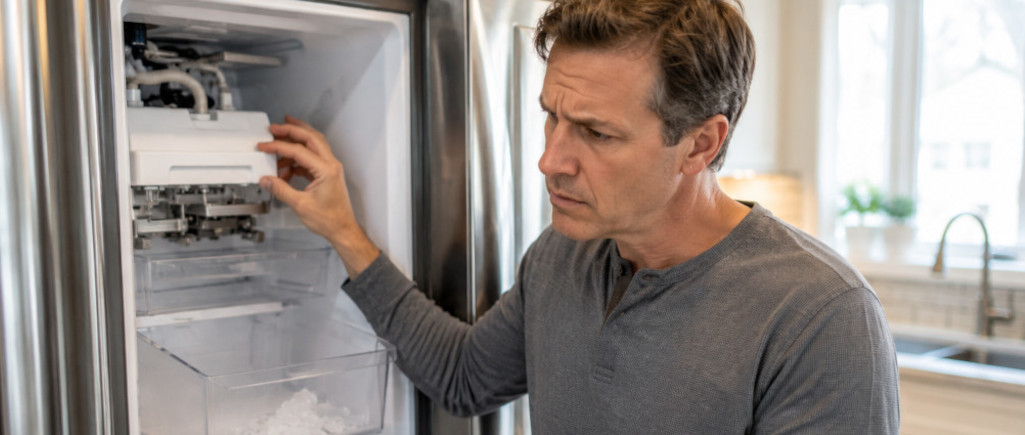
Two Real-World Scenarios Homeowners Commonly Encounter
The Ice Maker That Runs All Day but Produces Very Little Ice
One of the most frustrating situations occurs when the machine appears to be operating normally but the ice bin remains nearly empty.
In many cases, mineral deposits have accumulated on internal components responsible for freezing and releasing ice. The machine continues cycling, but efficiency drops significantly.
When caught early, a thorough descaling and sanitizing service often restores normal production. When ignored for months or years, the buildup can place additional stress on pumps, valves, and refrigeration components.
The Ice Maker Connected to the Wrong Water Line
Not every problem is caused by maintenance.
Occasionally, newly installed ice makers are mistakenly connected to a hot-water line rather than a cold-water supply.
The appliance technically functions, but it must work much harder to freeze incoming water. Production remains consistently below normal levels, and energy consumption may increase.
If your ice maker has struggled since the day it was installed, verifying the plumbing connection is a worthwhile first step.
A Practical Ice Maker Maintenance Schedule
Routine maintenance helps prevent many common performance issues.
Monthly Tasks
- Inspect the water supply line for leaks or wear.
- Clean exterior surfaces.
- Check freezer temperatures.
- Empty and wipe down the ice storage bin if needed.
Every Six Months
- Replace the water filter.
- Clean condenser coils.
- Descale internal components according to manufacturer recommendations.
- Sanitize food-contact surfaces.
- Inspect the water inlet connection.
Annually
- Schedule a professional inspection if performance has declined.
- Check for unusual noises or inconsistent ice production.
- Verify that seals, sensors, and controls operate properly.
For households with hard water, descaling every three to four months may be beneficial.
How Hard Water Affects Ice Makers
Hard water contains elevated levels of minerals such as calcium and magnesium.
As water freezes, these minerals can accumulate inside the machine, creating deposits that:
- Restrict water flow
- Reduce production efficiency
- Affect ice quality
- Increase maintenance requirements
Homeowners in hard-water regions often benefit from:
- Whole-home water softeners
- Dedicated filtration systems
- More frequent descaling intervals
A simple water hardness test can help determine whether mineral content is contributing to recurring ice maker problems.
Repair Costs vs. Preventive Maintenance
Many homeowners delay maintenance because the ice maker still produces some ice.
Unfortunately, small issues often become larger and more expensive over time.
Typical costs may include:
| Service | Estimated Cost |
| Water filter replacement | $20–$60 |
| Professional cleaning and descaling | $100–$250 |
| Water inlet valve replacement | $150–$350 |
| Ice maker assembly replacement | $250–$600+ |
While costs vary by model and location, preventive maintenance is generally far less expensive than replacing major components. This is especially true during seasonal transitions, when many homeowners begin using appliances more heavily and encounter issues that could have been prevented with routine upkeep. Understanding the most common appliance repairs in spring and how to avoid them can help you stay ahead of problems before they lead to costly service calls.
Early Warning Signs You Shouldn’t Ignore
Ice makers often provide advance warning before complete failure.
Watch for:
- Reduced ice production
- Smaller ice cubes
- Cloudy or foul-tasting ice
- Longer production cycles
- Unusual noises
- Water leaks near the appliance
Addressing these symptoms early can help prevent more extensive repairs later. The same principle applies to other household appliances. For example, understanding the common causes for a shaking washer can help homeowners identify small issues before they develop into expensive mechanical repairs.
Frequently Asked Questions
How often should I clean my home ice maker?
Most manufacturers recommend descaling and sanitizing every six months. Homes with hard water may require cleaning every three to four months.
Why is my ice maker running but not making ice?
Restricted water flow, mineral buildup, frozen fill tubes, dirty filters, and temperature problems are among the most common causes.
Can I descale my ice maker myself?
Yes. Most manufacturers provide approved cleaning procedures and descaling products. Always follow the instructions in your owner’s manual.
Why does my ice taste or smell bad?
Dirty filters, bacterial growth, stagnant water, and internal residue can affect ice quality. Replacing the filter and sanitizing the unit often resolves the issue.
When should I call a technician?
If basic maintenance and troubleshooting do not restore performance, or if you notice leaks, electrical issues, unusual noises, or refrigeration problems, professional diagnosis is recommended.
Keep Your Ice Maker Running Reliably
An ice maker that stops producing ice is not necessarily broken. In many cases, the problem comes down to maintenance, water-flow restrictions, temperature issues, or minor component failures that can be identified before they require major repairs.
If your ice maker suddenly struggles to keep up with demand, start with the basics. Check the water supply, replace the filter, verify freezer temperatures, and perform any recommended cleaning procedures. Taking action early can often restore normal performance, extend the appliance’s lifespan, and help you avoid unnecessary repair costs.